
The Hidden Risks in Used Phone Deals (and How to Spot Them)
Avoid used-phone scams with simple checks for IMEI status, activation locks, condition, parts authenticity, and payment safety before you buy or sell.
Why used-phone deals go wrong (even when the listing looks legit)

Buying used smartphones peer-to-peer can feel like a bargain hunt—but the risk isn’t just “getting a scratched phone.” The most expensive failures happen when a device is unusable (stolen, blacklisted, or activation-locked), or when the payment method offers no recourse. In local meetups, pressure and time limits make it easier to miss red flags. In shipped sales, the gap between “photos” and “what arrived” creates disputes that are hard to prove.
Trust breaks down because both sides lack consistent proof. Buyers can’t reliably verify battery health, internal repairs, or whether the IMEI will later be reported stolen. Sellers, meanwhile, worry about chargebacks, fake “item not received” claims, or unsafe in-person exchanges. Strong fraud prevention and buyer safety start with repeatable checks: confirm device identity (IMEI), confirm it’s transferable (unlocked, no locks), and confirm the condition matches the price—before money changes hands.
The most common failure modes: what scammers exploit and how to spot it fast
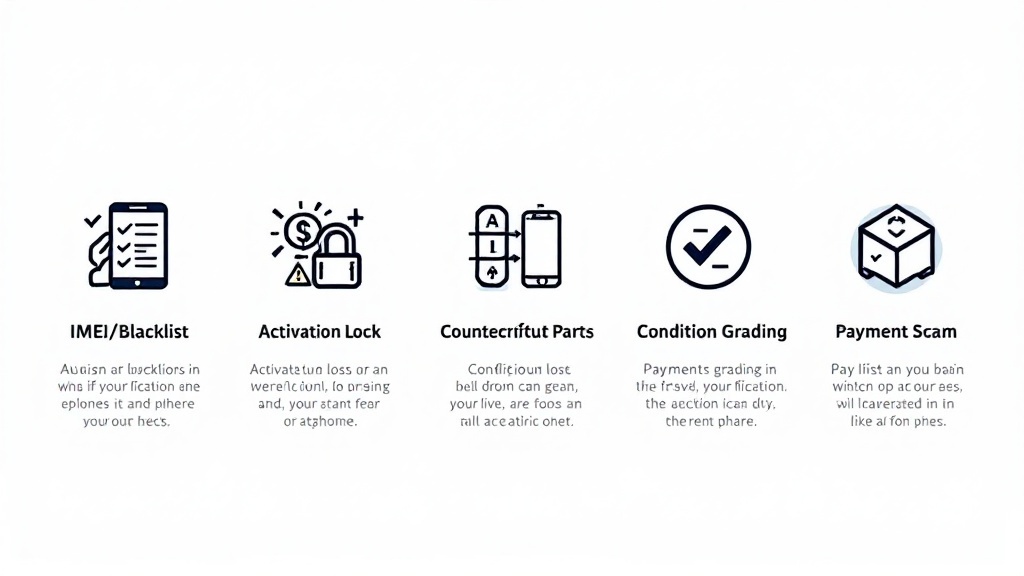
The biggest peer-to-peer losses usually fall into five buckets: stolen/blacklisted devices, activation locks, counterfeit or swapped parts, misrepresented condition, and payment scams. You don’t need special tools to catch many of these—you need a short script you follow every time, plus a refusal to “skip steps.”
Start with identity and ownership: ask for the IMEI before meeting or shipping and run an IMEI check through a reputable device-status source. Then verify transferability on-device: confirm iCloud/Find My (Apple) or FRP (Android) is fully removed, and that the phone isn’t tied to an unknown account. Next, look for counterfeit parts: True Tone missing after a screen swap, inconsistent camera performance, or “battery health” that doesn’t match real usage.
Finally, watch the payment angle. Overpayment “refund” tricks, screenshots of transfers, and requests to move off-platform are classic fraud prevention red flags in peer-to-peer sales. If they won’t share the IMEI, won’t show the unlock status in settings, or won’t allow a basic inspection, walk away.
A practical risk checklist for buyers and sellers (before you meet or ship)
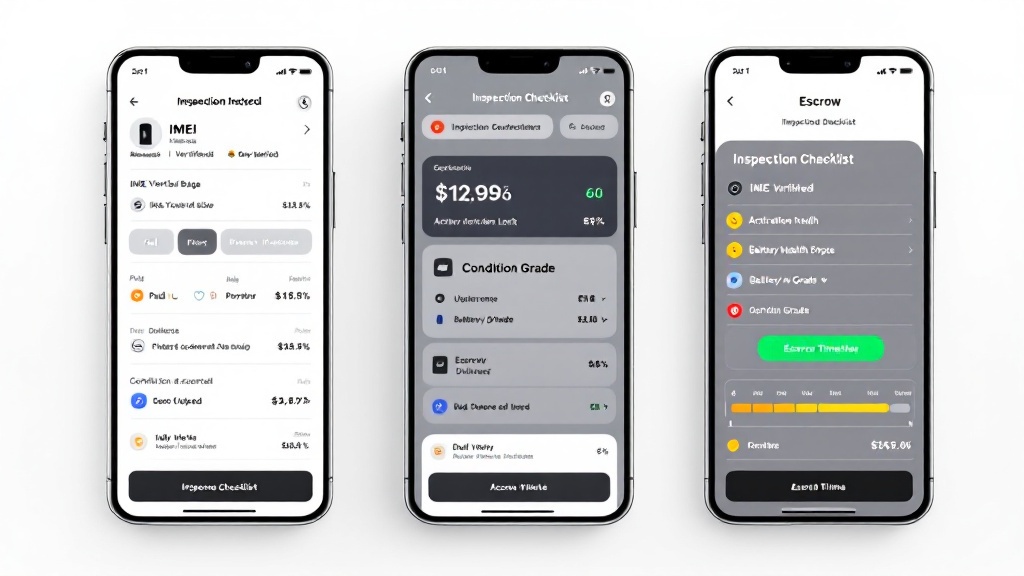
Use this quick checklist to reduce disputes and improve buyer safety—especially in peer-to-peer deals where trust is thin. Before meeting/shipping: (1) Get the IMEI and run an IMEI check (lost/stolen/finance flags). (2) Confirm carrier lock status (unlocked vs. tied to a network). (3) Require clear photos/video: front glass, back, corners, ports, and the screen on white/black backgrounds. (4) Ask for battery health and a screenshot from settings. (5) Match model/storage/color to the IMEI-reported device details when possible.
At handoff (or on arrival): verify activation locks are removed, test Face ID/Touch ID, cameras, speakers, mic, charging, buttons, Wi‑Fi/cellular, and look for “parts and service history” warnings. Document everything with time-stamped photos.
For sellers, protect yourself with tracked shipping, serial/IMEI recorded, and a clear condition grade. For buyers, avoid irreversible payments; for sellers, avoid releasing the device on “pending” transfers. Platforms like PhoneTrust Exchange operationalize these steps with guided listings, verification signals, and escrow tied to delivery acceptance—making safer transactions the default.